Especial Kuala Lumpur
Walking Inside Kuala Lumpur's Moorish Clock Tower
After a year behind hoardings, the Sultan Abdul Samad Building let the public through its doors in 2026 — here is what is actually inside, what it costs, and the hour to turn up.

Por Lena BrandtThe city between the towers
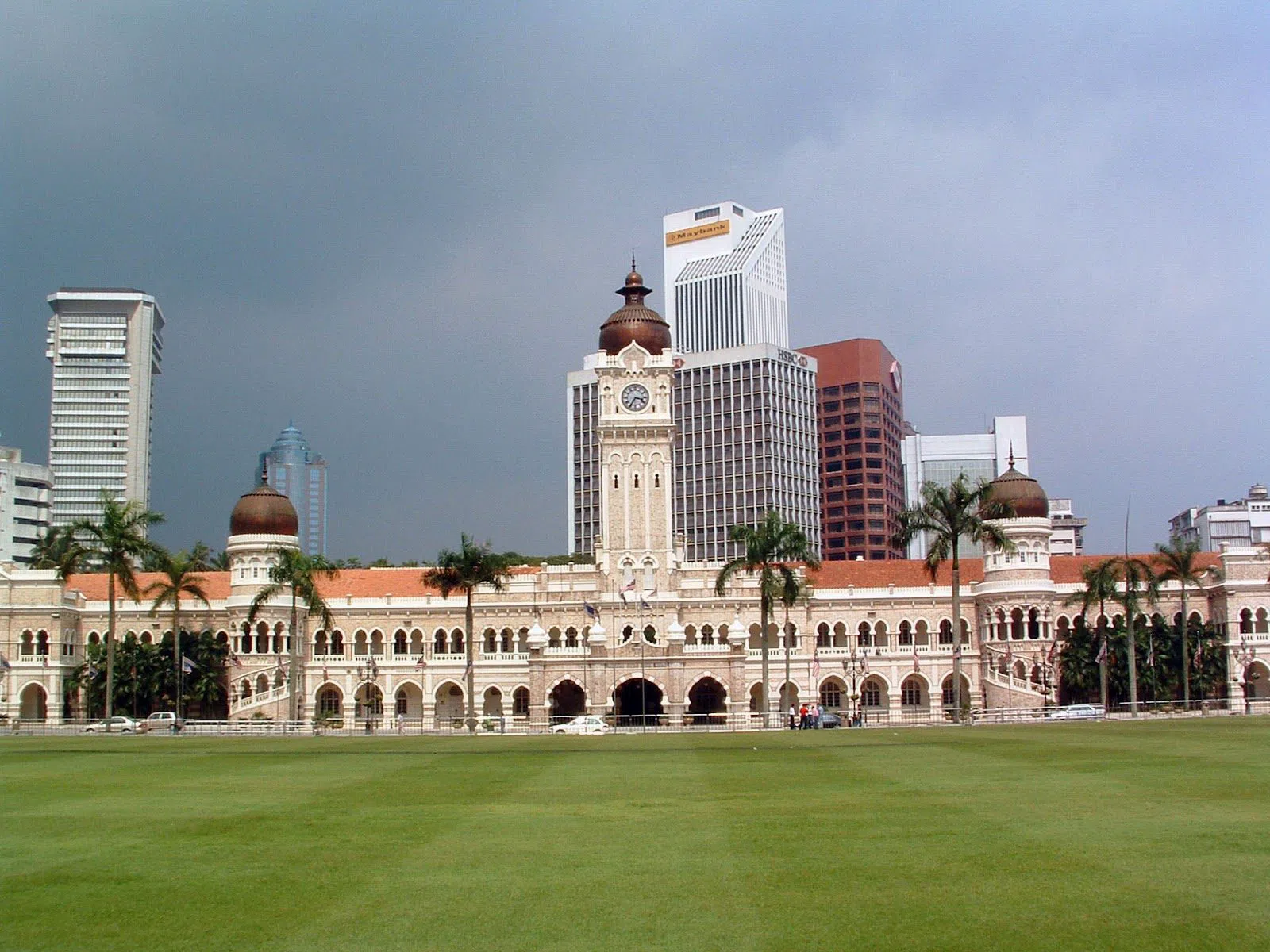
For most of the years I have been coming to Kuala Lumpur, the clock tower on Jalan Raja was something you photographed from across a lawn and then walked away from. Forty-odd metres of banded brick under a copper dome, horseshoe arches running the length of the facade, and absolutely nothing to do with it except stand on the grass and point a camera at it. That changed in February 2026. The doors are open, the arcades are full of families in borrowed kebaya, and the building put up to administer a tin rush now serves you nasi lemak for under ten ringgit.
What you walk into now
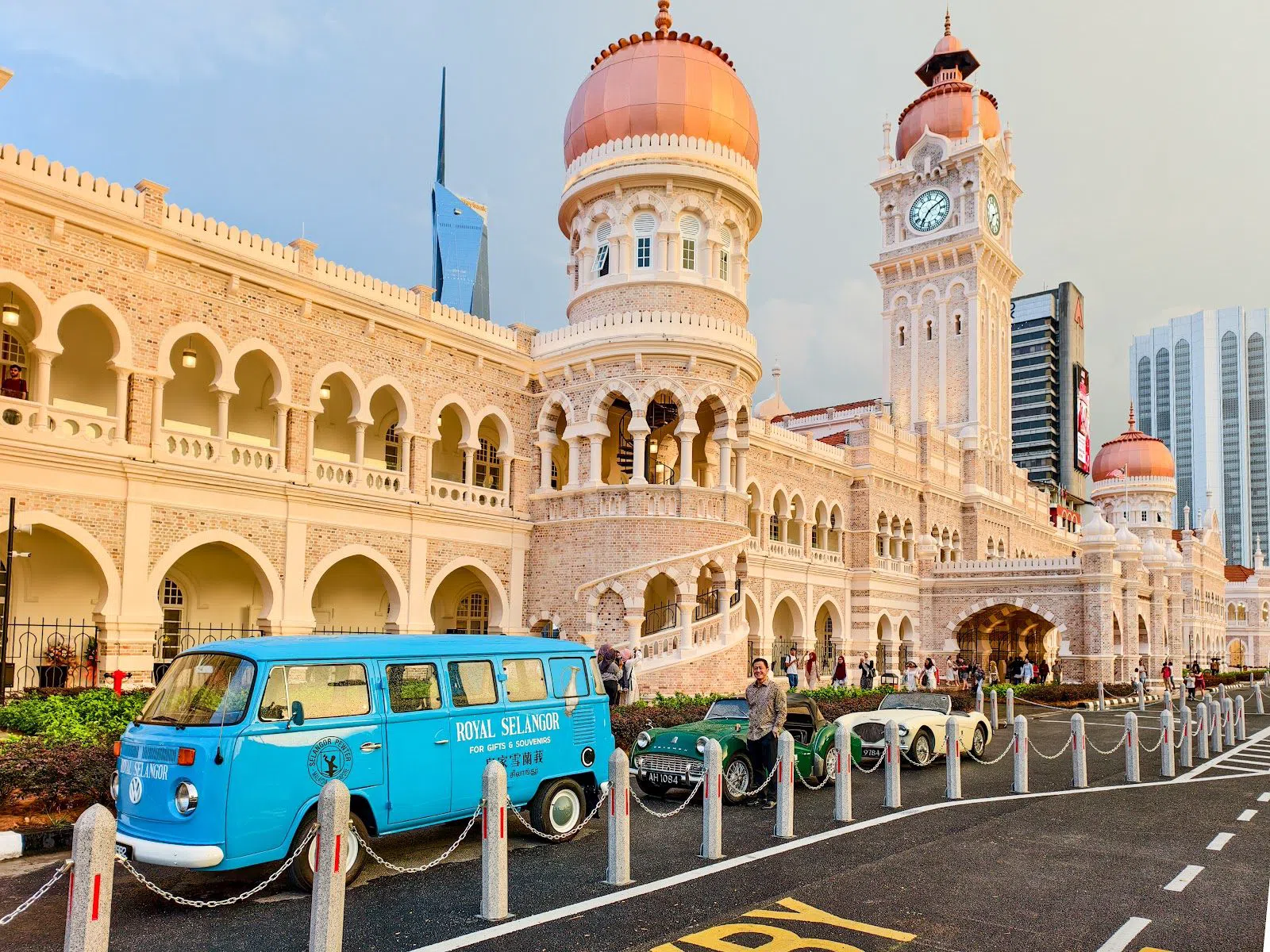
Bangunan Sultan Abdul Samad (Dataran Merdeka, Jalan Raja) reopened Block 1 to the public on 2 February 2026, after a restoration run by Khazanah and Warisan KL that consumed something like four million bricks and 94,000 roof tiles and had the dome rebuilt by hand. Those numbers make more sense once you know how long it was shut. The building had been government offices, then courts, then a long stretch of scaffolding and polite fencing; nobody I know had been inside. Now entry to the building and its arcades is free, there is no booking and no bag theatre at the door, and the practical hours are roughly 8am to 10pm, with anything gallery-shaped running 9am to 6pm.
The visit is horizontal, not vertical. You walk the ground and upper arcades, the courtyards and the gallery rooms. Nobody is taking you up to the clock face. What you get instead is the thing the lawn can never give you: the view back out through those arches, the brickwork at arm's length, the proportions of a corridor built for clerks and couriers in the 1890s, when the Federated Malay States Secretariat ran the tin and rubber economy of the peninsula out of these rooms. The arcades are wide and there are lifts, so a coachload absorbs into the building without the bottleneck you get at most heritage sites. The crowding, when it comes, is at the ticket counter.
Twenty minutes gets you the arcades and a sense of the thing. Two to three hours covers the galleries properly. A full evening is now genuinely possible, which was not true of this site a year ago.
Planeje sua viagem para Kuala Lumpur
Preços em tempo real dos nossos parceiros de reserva.
Cancelamento grátis em muitos quartos. Podemos receber uma comissão quando você reserva.
The one ticket decision on the whole site
Almost everything here is free. The exception is Kuala Lumpur City Gallery (inside the building, Dataran Merdeka), which moved out of its old premises at 27 Jalan Raja and into the restored block, and it is the only ticketed thing on the site. Four halls (Confluence, Visionary, Hikayat and Harmony) take the city from the muddy river junction to the skyline, in that order. Expect around RM40 for an adult and RM22 for a child aged 6 to 12 if you are not Malaysian; Malaysians also pay now, a change that came in on 18 June 2026.
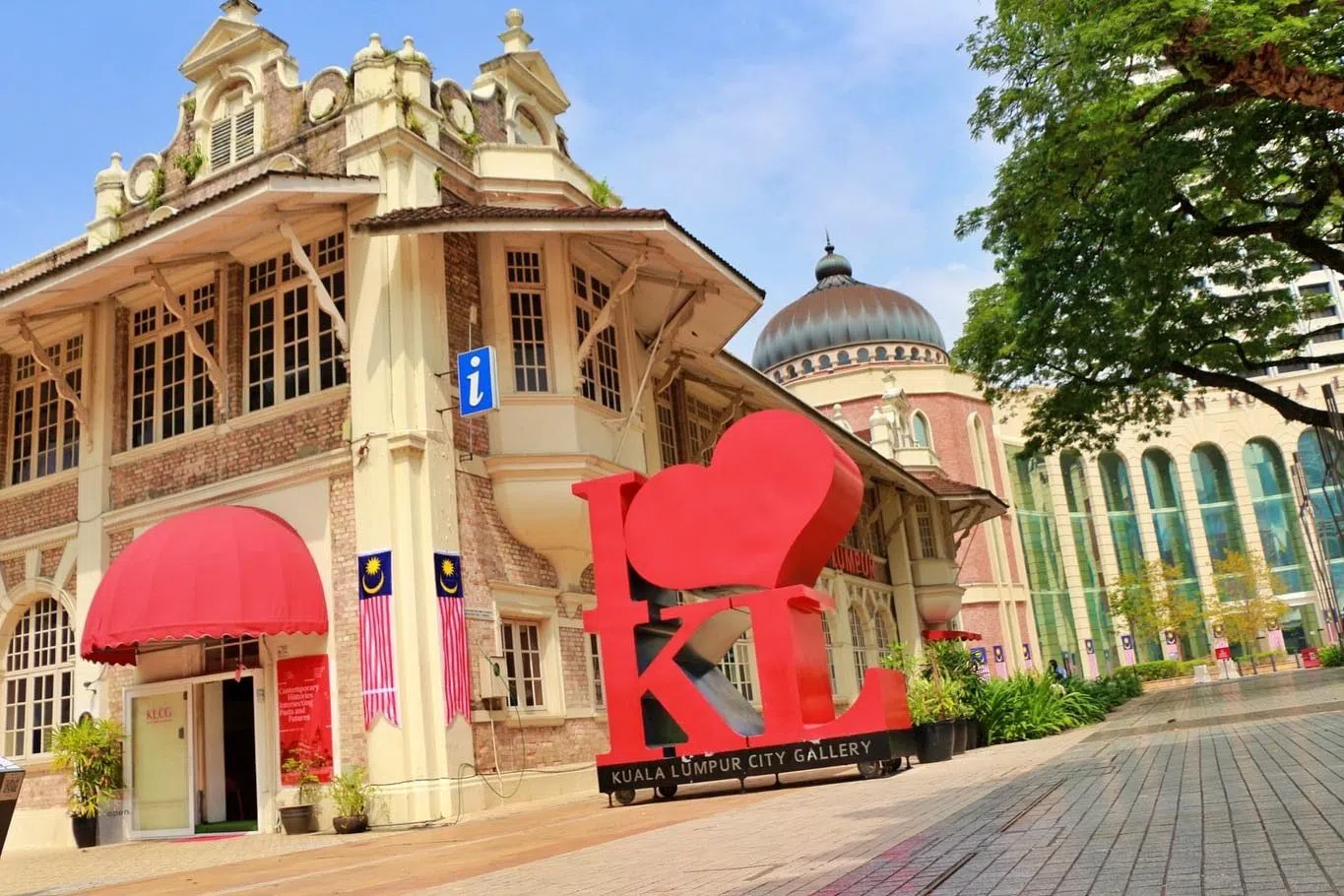
Buy at the Balai Tamu visitor centre on the ground floor, or online before you come. Groups are welcome but one counter and a coachload is a slow combination, so pre-book if there are more than about eight of you. My honest read on the RM40: worth it on a first visit to the city, when you want the chronology and the maps in one room before you go out and walk it. If you already know Kuala Lumpur, or you are travelling as a family of four and doing arithmetic, skip it without guilt and spend the time downstairs.
Because downstairs is where the best free thing is. The Royal Selangor Gallery at Bangunan Sultan Abdul Samad (same building, ground level) is free, walk-in, and it tells the tin story, the same story this building was constructed to administer, so the two sit together properly rather than as a gift-shop bolt-on. Forty-five minutes is about right. The hands-on pewter-crafting sessions are charged per person and limited to a set number of seats, so if you want one, ask at the counter the moment you arrive rather than after lunch.
The kebaya on the arcades
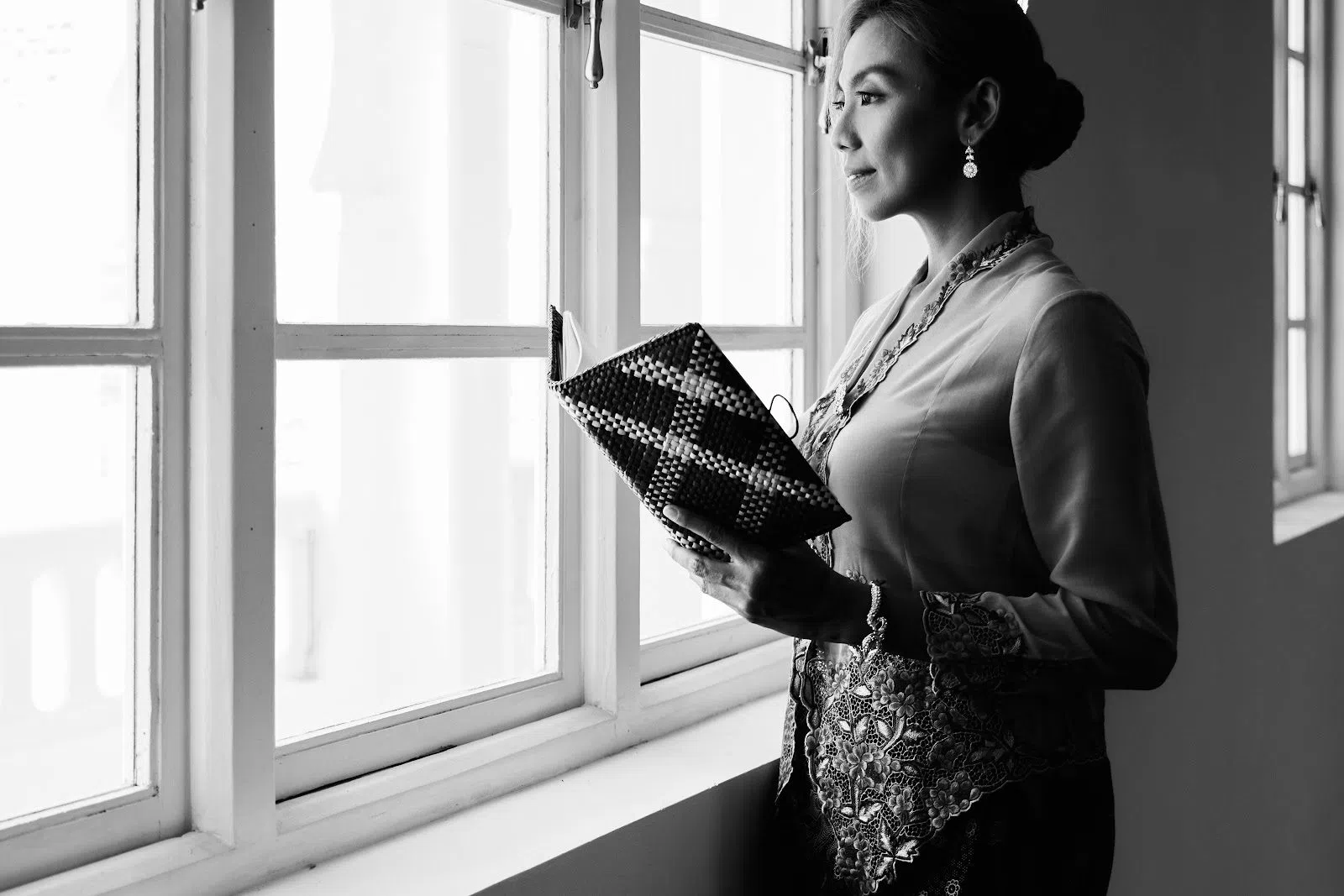
If you turn up on a weekend and wonder why half the arcade is a photo set, this is why. Biku Biku by Ang Eng Nyonya Kebaya (inside the City Gallery footprint) rents traditional dress, women's kebaya, children's Nyonya outfits, baju Melayu for men and boys, at about RM80 for a three-hour hire, open 9am to 6pm. It has become the default thing Malaysian families do here, and it is the single most useful tip for anyone who came specifically for photographs: the arcades on a Saturday afternoon are full of portrait shoots, and either you join them or you come at dawn.
Families and couples are fine walking in. A larger group should message ahead about sizes, because stock is stock.
Eating without leaving the site
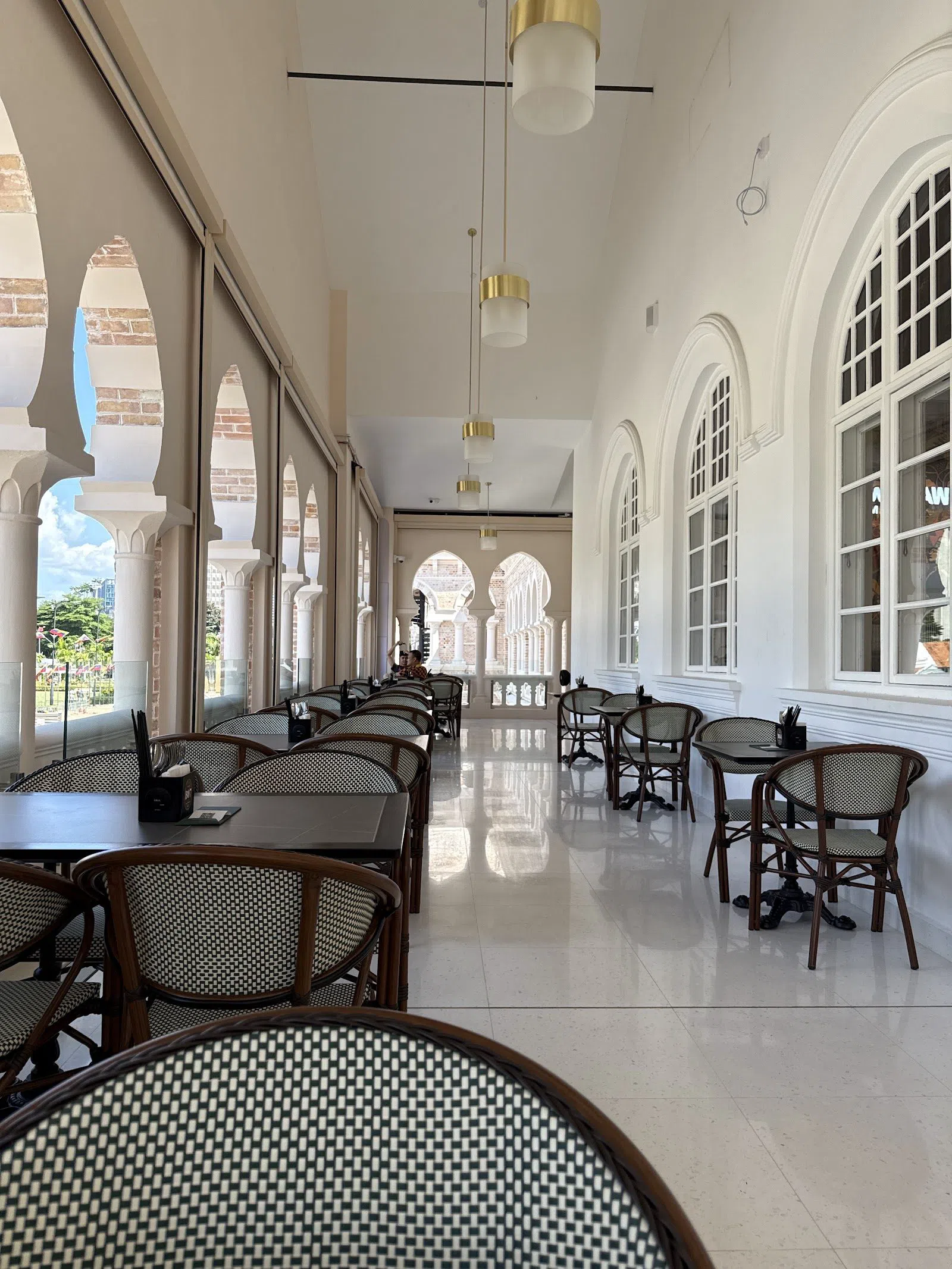
Merdeka Square has almost no shade, and the walk to anywhere else in the precinct is ten minutes in equatorial heat. Kaw Kaw Malaya (inside the building) solves it with counter service and Malaysian food at Malaysian prices: RM8 to RM15 a dish, drinks around RM8, nasi lemak ayam merah at roughly RM8.90. It handles groups happily off-peak and queues hard between 12.30 and 2pm, which is simply when the country eats. Go at noon or at two.
The bigger change is next door. Pejabat Pos Besar Lama, the old General Post Office (Jalan Raja, across the precinct), was Phase 2 of the same restoration and has been open to the public since 23 May 2026, running 10am to 10pm with eight Malaysian operators under one roof, among them Niko Neko, Oriental Kopi and A Piece of Malaysia. Open plan, multiple counters, no door policy and no reservations to worry about. It is the easiest place in the precinct to park a group that cannot agree on food, and it is the reason the square now holds you for an evening rather than twenty minutes.
Where to stand for the photograph
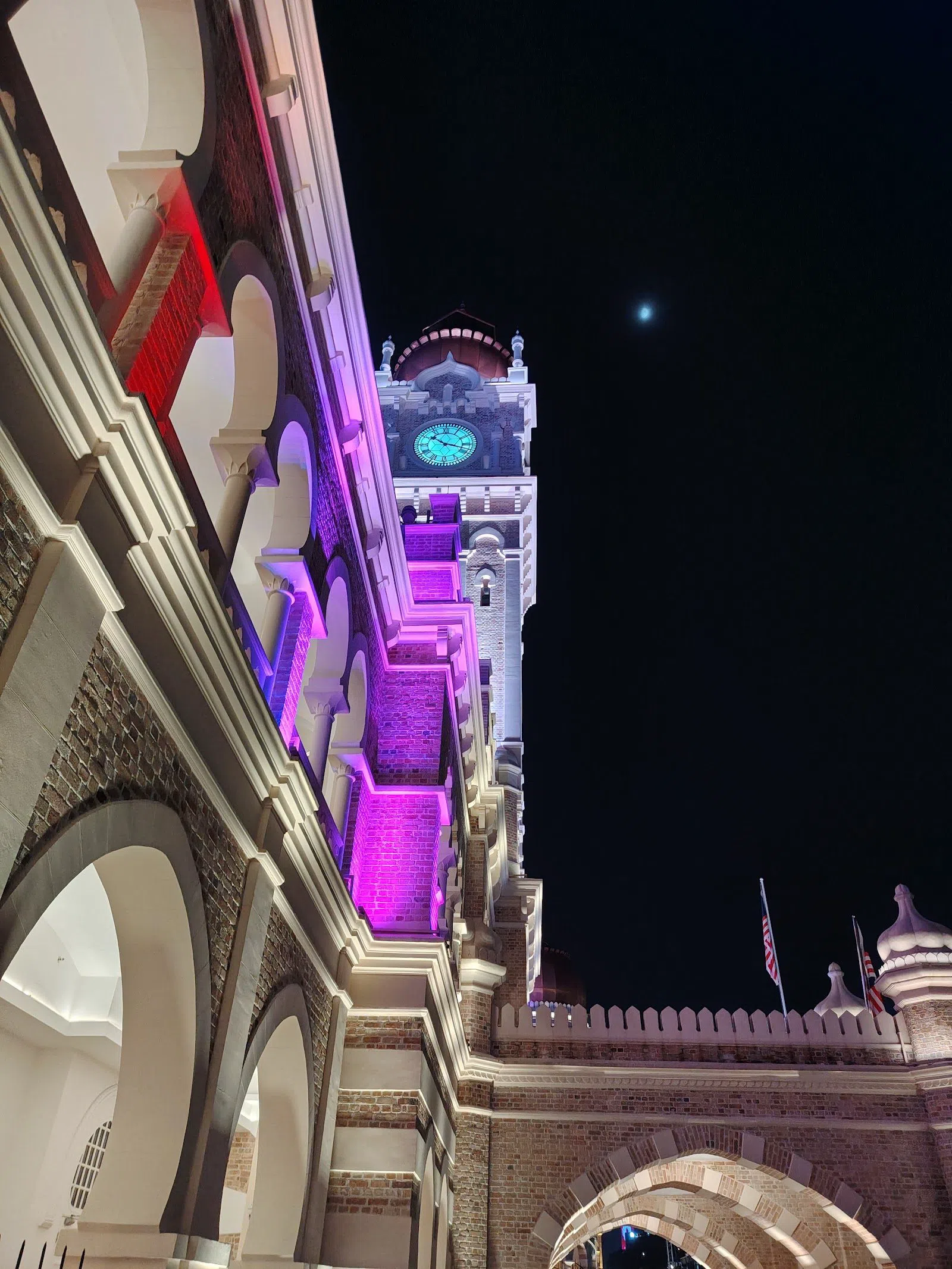
Dataran Merdeka (Merdeka Square) (Jalan Raja) is the viewpoint, and the only place you can fit the whole facade into one frame. It is open public ground, 24 hours, no permit needed for a normal tour group. Come before 8am: the light is soft, the lawn is empty, and the clock tower is lit from the east. School groups and coaches land mid-morning and the lawn stops being yours.
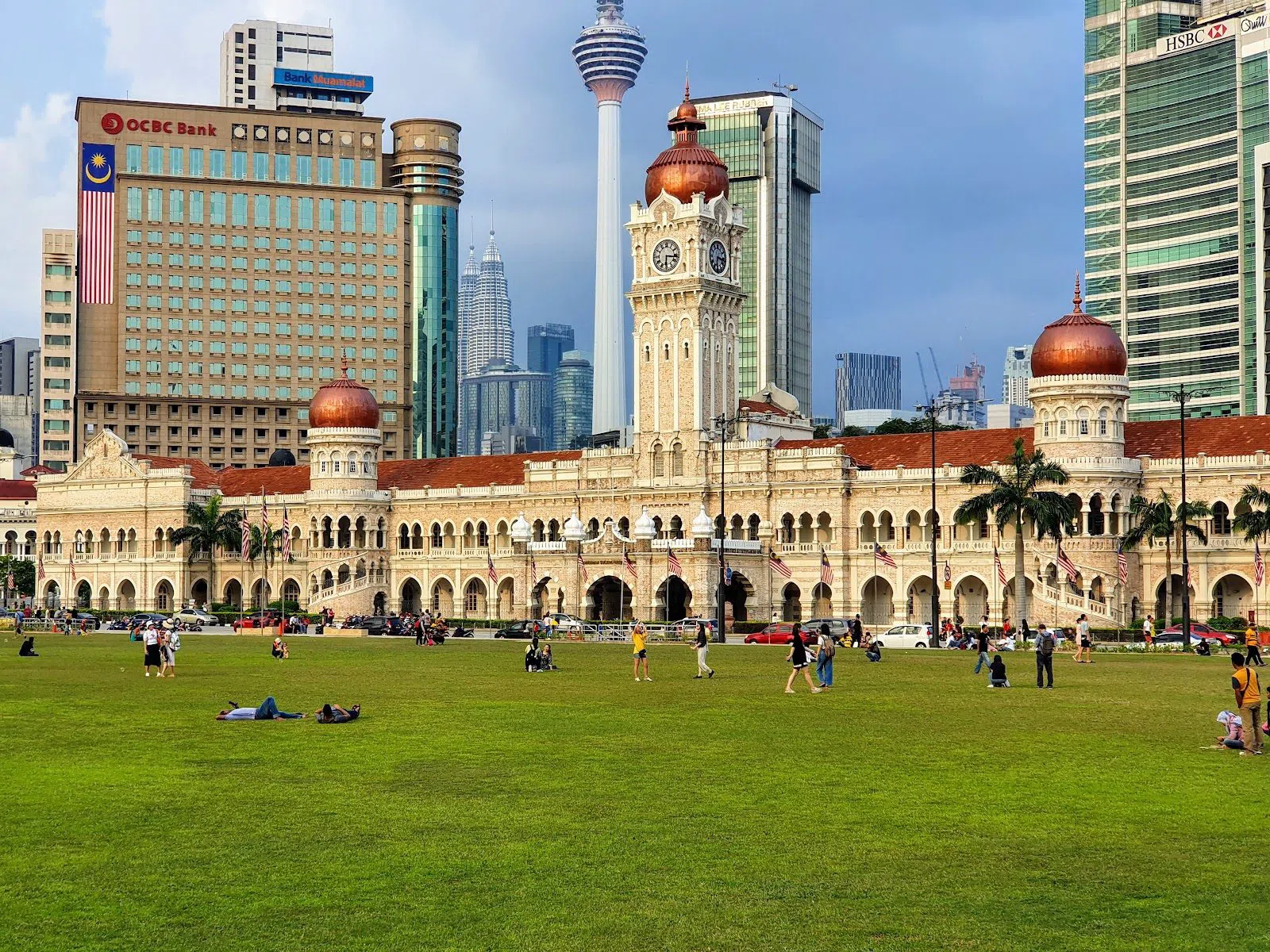
One date to work around is the run-up to 31 August. National Day rehearsals and road closures shut the square down for days at a stretch, and if you have one morning in the city you do not want it to be that one.
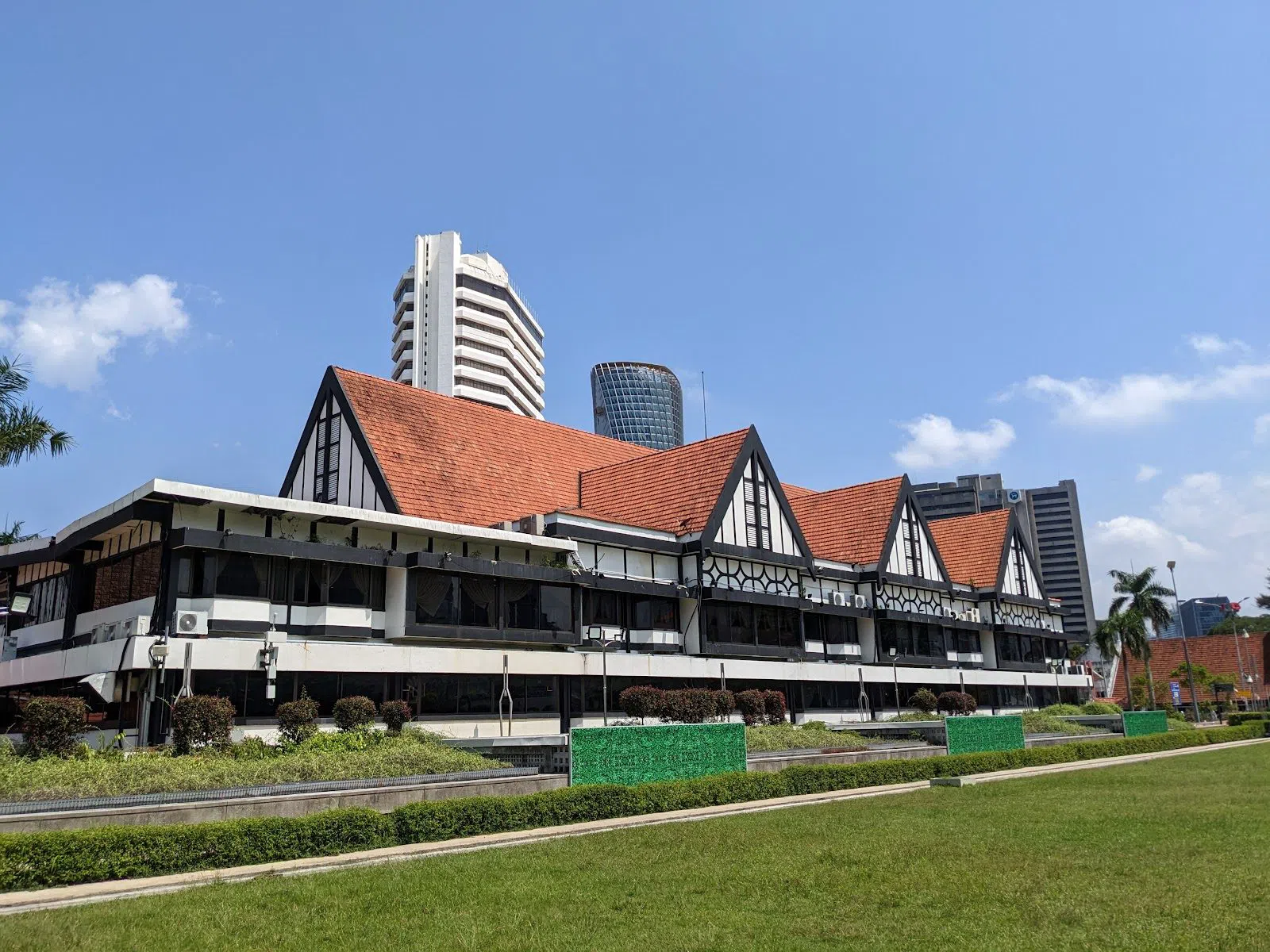
The long black-and-white Tudor building on the far side of the lawn is the Royal Selangor Club (Dataran Merdeka), it is members only, and you cannot walk in for a drink. Not as a couple, and certainly not as a group. You need a member to sign you in. It is in every photograph of this square and it is not an option on your afternoon.
Two stops on the square that nobody takes
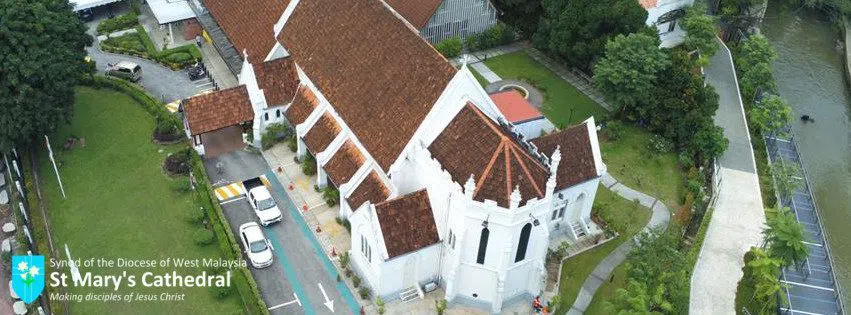
St Mary's Cathedral (north side of Dataran Merdeka) dates from 1894, is free, open most of the day, and runs guided tours during the week. It is the smallest effort-to-payoff stop in the precinct: two minutes from the clock tower, and almost everyone crossing the lawn walks straight past it. Keep a group quiet and stay out of service times.
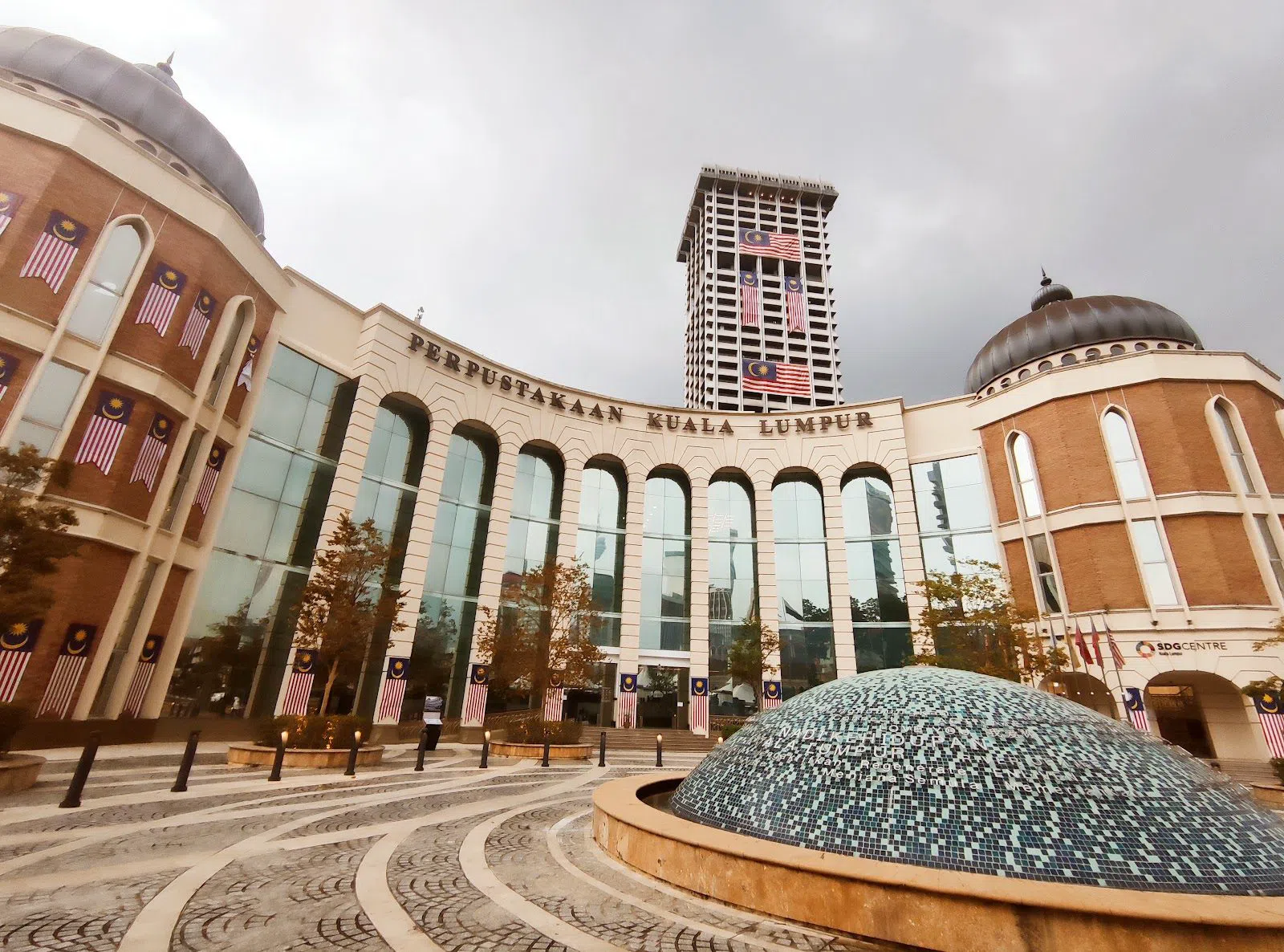
Kuala Lumpur City Library (Dataran Merdeka) is the air-conditioned bolt-hole when the heat lands or a thunderstorm opens up, and it is free. It is also a working library, so small groups only and no loud touring. Print the closures somewhere you will actually read them: shut on Mondays, shut on public holidays, and shut on the first weekend of each month.
Five minutes to the confluence
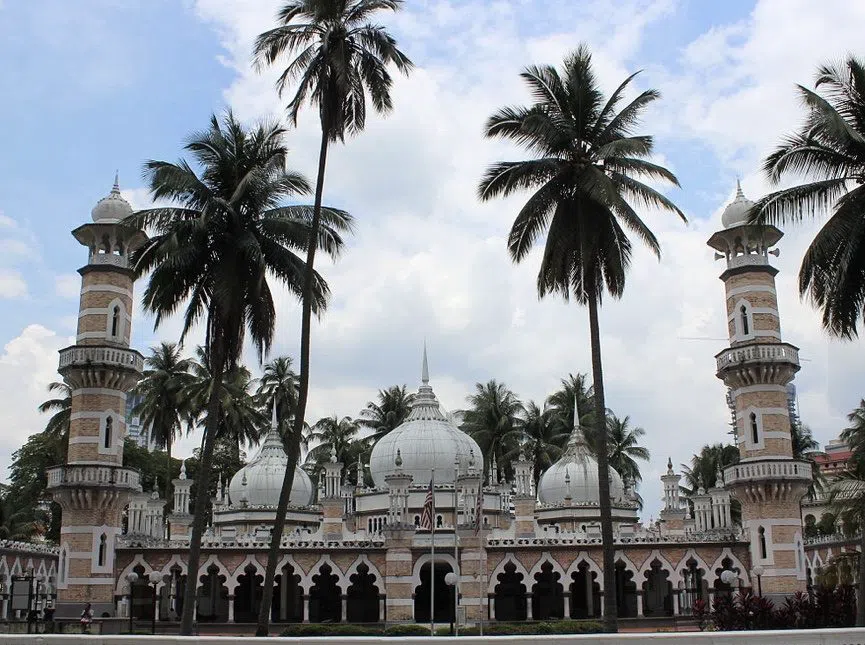
Walk east and you reach Masjid Jamek Sultan Abdul Samad (Jalan Tun Perak, at the river junction), built in the same Moorish-revival vocabulary by the same hand and the obvious answer to the question of what else is in the frame. It is free and needs no booking, non-Muslim visitors are admitted outside prayer times, and robes and headscarves are loaned at the entrance. The visiting windows are the catch: roughly 10am to 12.30pm and 2.30pm to 4.30pm, and Friday midday is effectively closed to visitors. People turn up at the wrong hour and are politely turned away every single day.
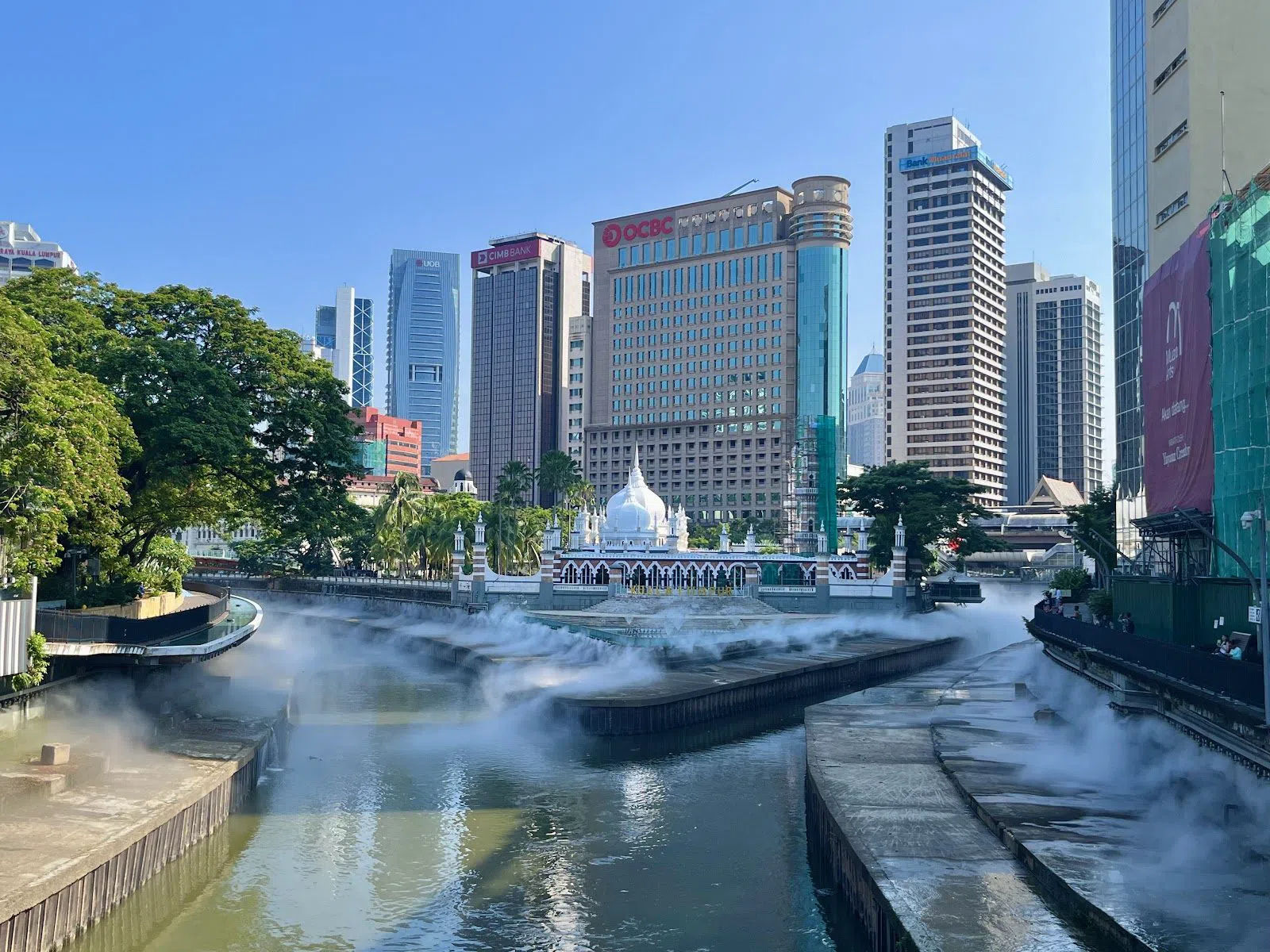
Below the mosque is the River of Life (Klang-Gombak confluence), free, open riverside, 24/7. This is the literal spot the city is named for, the muddy meeting of two rivers, and the light-and-mist show runs evenings from around 7pm. The viewing decks get crowded. The clock tower is floodlit at the same hour, so the sensible evening is river first, then back up to the lawn for the facade in the dark.
Best time to go
The day has a clean shape here. Dawn to 8am on the lawn for the facade and an empty square. From 9am to 11.30am indoors, when the galleries have just opened and the counter queue has not formed. Lunch inside the building before 12.30pm. Mid-afternoon is the hour this precinct defeats you, so take it in the library, or walk five minutes to air conditioning. Then out again at 7pm for the river and the floodlights.
By day of the week: Monday loses you the library. Friday loses you the mosque around midday. Weekends are peak for the costume shoots and the slowest at the City Gallery counter, and also the liveliest, which may be exactly what you want. By season, this is an equatorial city rather than a seasonal one, so plan around the afternoon thunderstorm rather than the month, and expect the heaviest of it around the monsoon transitions in spring and late in the year. The only hard calendar item remains the last days of August on the square.
Is it worth it, and who for
Yes, and that is a different answer than it would have been in 2025, when the honest verdict was "five minutes from the lawn". With Block 1 and the old post office hall both open, this is now a half-day in its own right rather than a photo stop between two other things.
It suits architecture-minded travellers, first-time visitors who want the city's chronology before walking it, and families, who get the costume rental and cheap food on the same site. It does not suit anyone chasing a view: there is no observation deck here, and if skyline is what you came for, this is the wrong half of the city.
On tickets at the door versus booking ahead, there is nothing to book except the City Gallery, the pewter workshop and a table you do not need. A guided city tour exists and will fold this building into a wider loop with transport and commentary, which is worth considering if you want the 1890s context delivered rather than read. Those run seven days a week, a full-day private option starts from around 62 USD per person, and the leading one is rated 4.7 out of 5 across 641 reviews. If you would rather walk it yourself, you lose nothing at the door.
Rain, heat and the walk onward
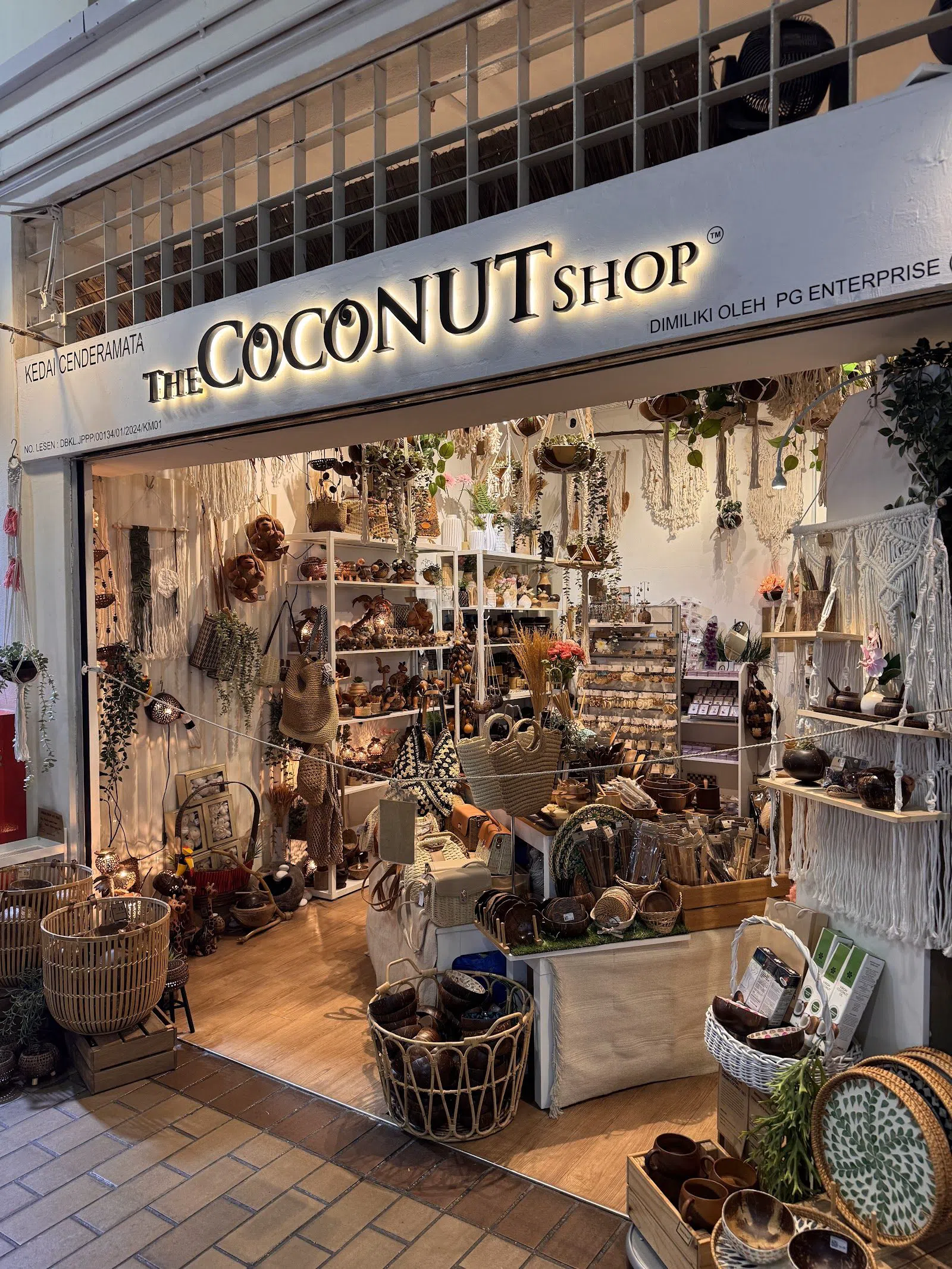
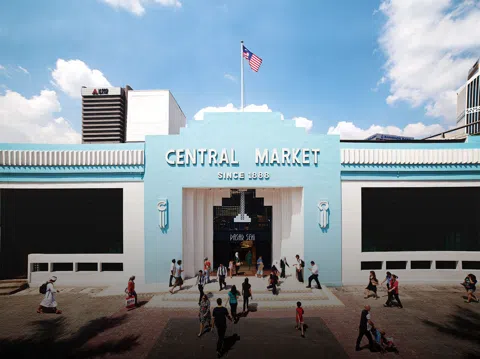
Central Market (Pasar Seni) (Jalan Hang Kasturi, five minutes' walk) is free to enter, reliably cool and dry, and takes groups without blinking; the ground floor has been reworked into a consolidated Market Hall of food outlets. Souvenirs run RM10 to RM150, food RM10 to RM30. It is the answer to both "what if it rains" and "where do I buy something".
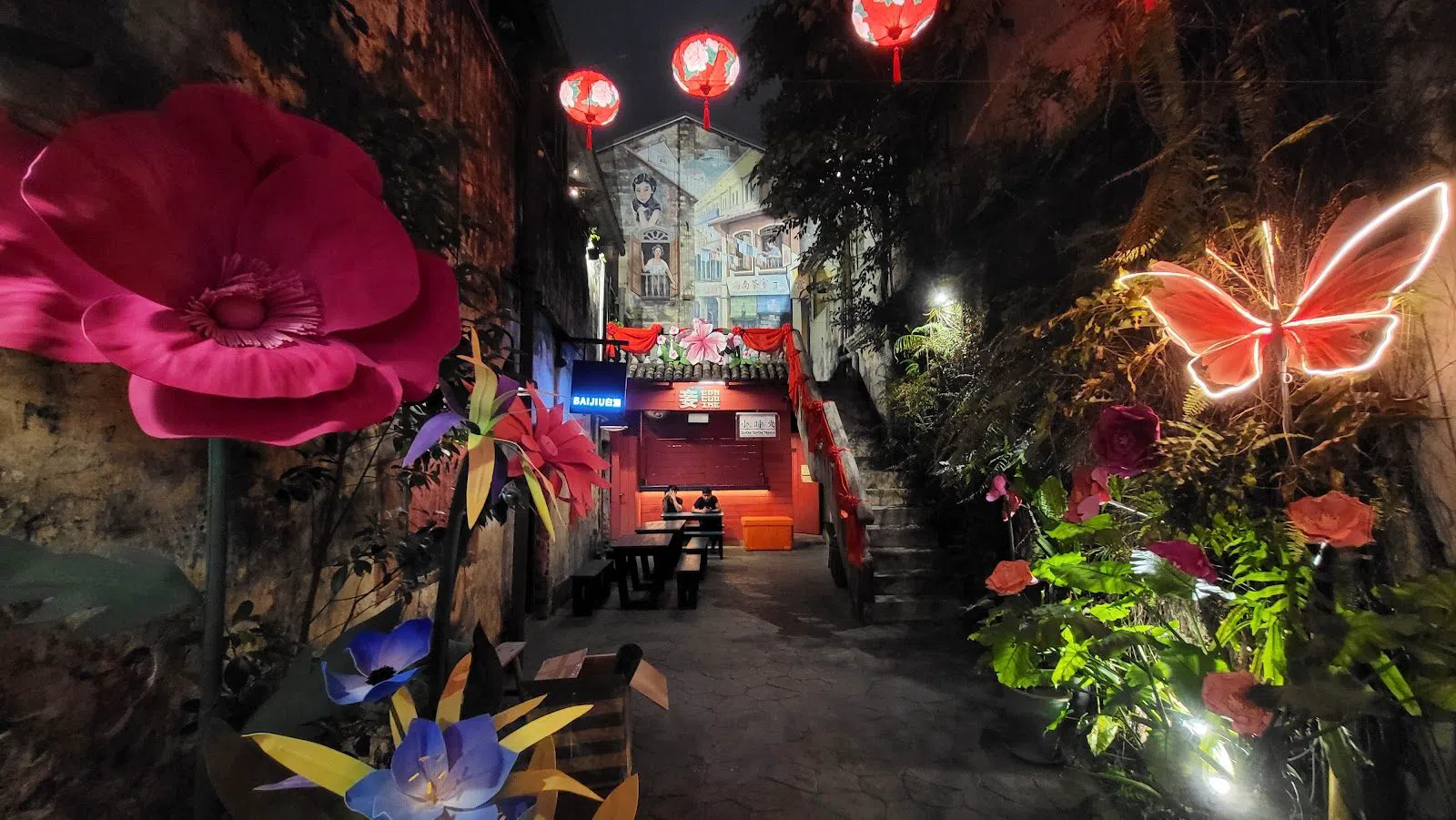
Kwai Chai Hong (Chinatown, off Jalan Petaling, ten minutes) is the counterweight to all this colonial brick, a restored laneway of 1960s Chinese Kuala Lumpur, free, open daily from around 9am to midnight. It is genuinely narrow, so a large group should split up, and it photographs best at dusk, which puts it in competition with the floodlit facade for the same slot. Pick one.
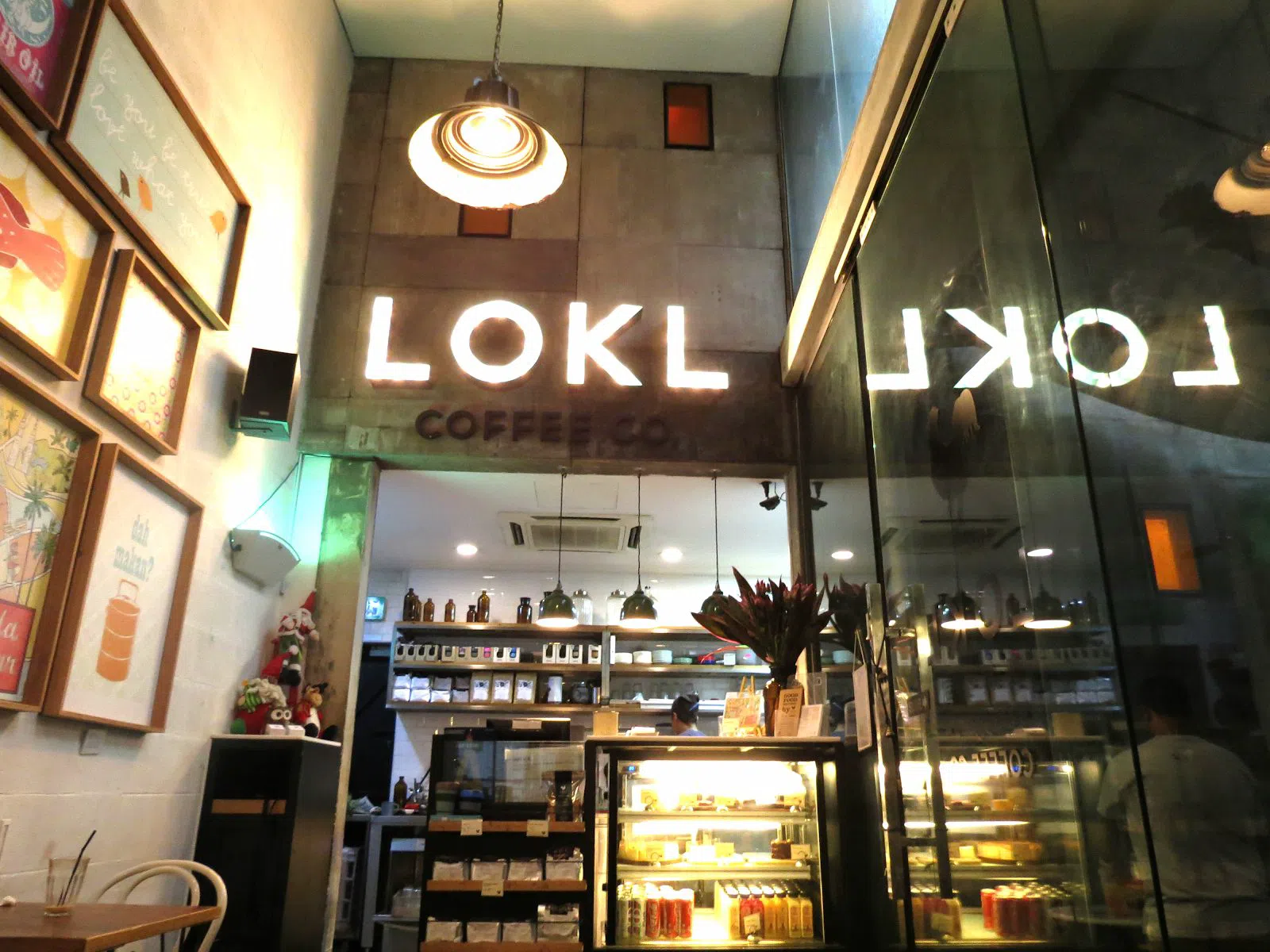
For coffee, LOKL Coffee Co (Jalan Tun H S Lee, Chinatown) has been running since 2012 and costs RM15 to RM35 a head. It is compact, fine for a few people without booking, and it shuts at 5pm, so an afternoon group will not fit. I name it specifically because the cafe every older guide to this precinct sends you to, Merchant's Lane, closed permanently in January 2026.
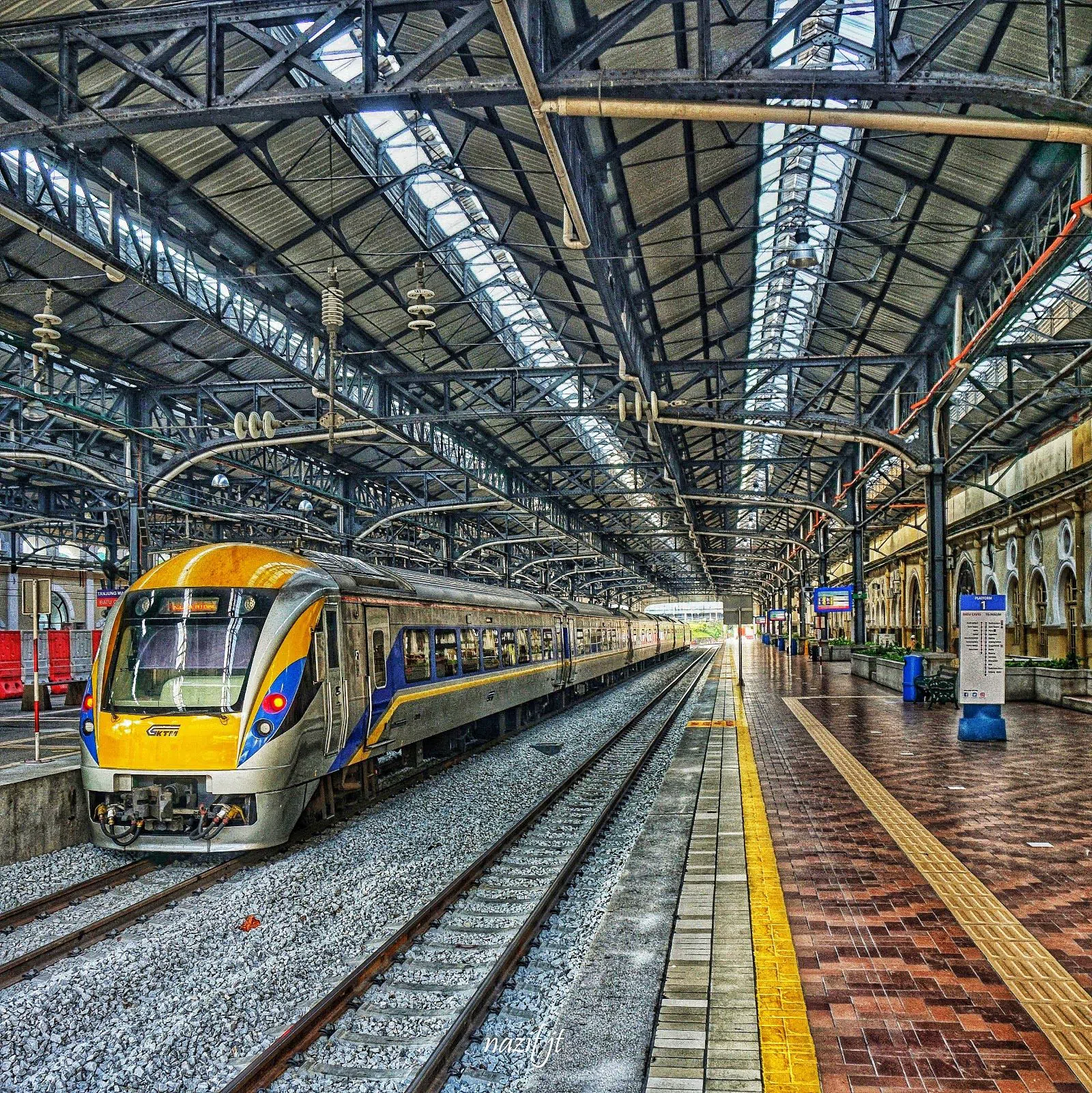
If the clock tower lands with you, walk ten minutes south to Kuala Lumpur Railway Station (Jalan Sultan Hishamuddin), which speaks the same architectural language and finished its own conservation works in March 2026. It is a working station, free to walk through and photograph around the clock; groups should stay off the platforms without tickets, and a KTM Komuter fare is a couple of ringgit if you want to ride.
Practical notes
Getting there. Masjid Jamek station is the one to aim for: it is on both the Kelana Jaya and Ampang/Sri Petaling lines and about five minutes' walk from the clock tower. Pasar Seni, on the Kelana Jaya line and the MRT, is seven minutes away and better if you are starting at Central Market. From KL Sentral you can take a KTM Komuter train one stop to Kuala Lumpur Station and walk up through the precinct. Ride-hailing is cheap but Jalan Raja and the roads around the square close for events more often than the apps know.
Money. Ringgit. Cards and QR payments are accepted across the restored buildings and the post office hall, but carry small notes for market stalls and counter food. The City Gallery is the only admission you will pay on the site.
Timing. Allow half a day, or split it: 8am on the lawn, back at 7pm for the river and the floodlights. Avoid 12.30pm to 2pm for lunch and the last week of August entirely.
Budget. A free day here is completely realistic: the building, the arcades, the pewter gallery, the square, the cathedral, the library, the mosque and the river cost nothing. Add the City Gallery at RM40, a three-hour kebaya hire at about RM80, lunch at RM15 and coffee at RM25 and you are still under RM200 a head for a full day.
Staying nearby. The precinct is walkable from most of the city centre; if you want to be out of the door at dawn, start with a Kuala Lumpur hotel search and look at the Chinatown and old-town side rather than the skyline hotels. For everything beyond this square, our Kuala Lumpur guide covers the rest of the city.
Antes de ir
Can you actually go inside the Sultan Abdul Samad Building?
Yes, since 2 February 2026. Block 1 reopened after a year-long restoration by Khazanah and Warisan KL, and entry to the building and its arcades is free with no booking required. Practical hours are roughly 8am to 10pm, with the galleries inside running 9am to 6pm.
How much does it cost to visit?
The building, the arcades and the Royal Selangor Gallery are free. The only admission on the site is Kuala Lumpur City Gallery, at around RM40 for an adult and RM22 for a child aged 6 to 12 if you are not Malaysian; Malaysians have also paid since 18 June 2026. Buy at the Balai Tamu visitor centre on the ground floor or online, and pre-book if you are a group — one counter and a coachload is slow.
How long do you need there?
Twenty minutes for the arcades alone, two to three hours if you do Kuala Lumpur City Gallery and the free pewter gallery, and a full evening if you eat in the old General Post Office hall and walk down to the river for 7pm.
Can you climb the clock tower?
No. The visit is a horizontal one — ground and upper arcades, courtyards and gallery rooms. There is no tower climb and no observation deck, so if a view over the city is what you want, this is the wrong part of Kuala Lumpur.
Do you need a guided tour or can you just turn up?
You can just turn up — nothing here requires a guide, and the only things to pre-book are the City Gallery ticket and a seat at the pewter workshop. A guided city tour is useful if you want the 1890s context delivered with transport attached; those run seven days a week and a full-day private option starts from around 62 USD per person.